


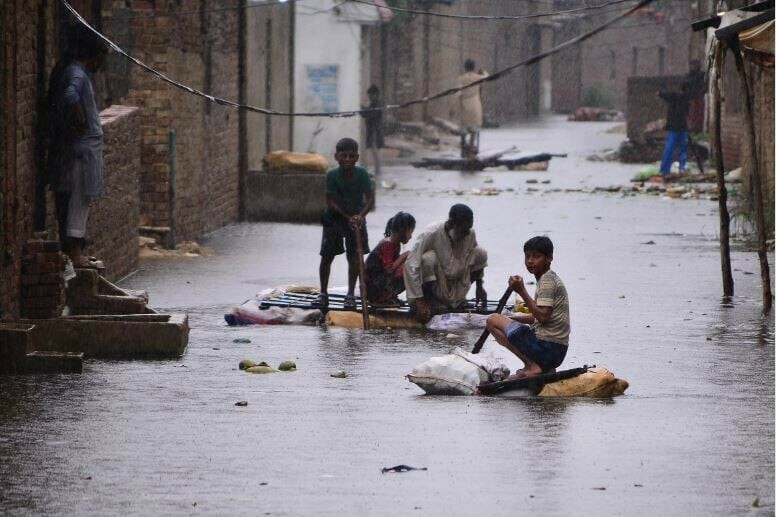
The water level in the Indus River continues to rise, leading to the overflowing of river channels in the Koh-e-Sulaiman region as monsoon downpours continued to pummel parts of the country.
While a deluge from rain-swollen rivers inundated low-lying areas, the Koh-e-Sulaiman region is also grappling with a catastrophic flood situation.
To mitigate the impact, six out of the seven canals originating from Sukkur Barrage have been closed, and all the gates of the water discharge barrage have been opened.
However, despite these measures, approximately 40% of the region is already underwater, compelling residents to seek refuge in safer areas.
In particular, the flood line at Benazir Bridge has surpassed three lakh cusecs, and the river from Dara Kah Sultan is inundating villages with a flow of seventeen thousand cusecs.
In response to the unfolding disaster, relief camps have been set up to provide assistance.
Moreover, the situation in Nankana Sahib has become increasingly dire as floodwaters wreak havoc at the head block, causing the collapse of numerous homes and buildings.
Following this, the ground connections have been cut off, leaving many residents stranded.
The Provincial Disaster Management Authority (PDMA) has issued an alert to the district administration of Nankana, urging immediate action to mitigate the damages.
Further downstream, the Indus River is experiencing a moderate flood at Taunsa, with an inflow of 387,587 cusecs and an outflow of 387,587 cusecs from the Taunsa barrage.
The water flow at Sulaimanki has been recorded at 84,430 cusecs.
Monsoon mayhem: Rivers overflow
The Indus River is not the only waterway causing distress. The river Sutlej, too, has crossed the 84,000 cusecs mark at Pakpattan, inundating areas and affecting countless lives.
The rising water levels have compelled people from neighboring areas to begin migrating to safer regions.
Meanwhile, other regions in Pakistan are also experiencing the impact of the ongoing monsoon season. The Punjab province, in particular, is bracing for potential flooding as the Pakistan Disaster Management Authority (PDMA) reports chances of stormy rains in various districts.
According to a PDMA spokesperson, the water levels in the rivers across Punjab have also been rising steadily due to the torrential rains. As a result, the Baloki area in the Ravi River is currently experiencing a low level of flood.
The inflow and outflow at Baluki Headwater have been recorded at 58,830 cusecs and 42,030 cusecs, respectively.
Water being released from Hub Dam spillways
The Hub Dam, a crucial water storage reservoir located on the Hub River, is facing a critical situation as its water levels continue to rise rapidly. In response to the escalating water levels, authorities have started releasing water from the dam’s spillways to prevent overflow and potential damage to the dam’s structure.
The recent heavy rains have significantly increased the inflow into the dam.
According to sources from the Hub Dam, the water level has surged to over three hundred and forty-nine feet, primarily due to the recent spell of torrential rains in the region. This rise in water levels has put immense pressure on the dam’s capacity, necessitating the controlled release of water through the spillways.
The Hub Dam, constructed in 1981 on the arid plains north of Karachi, serves as a critical water supply source for irrigation in Lasbella District and provides domestic and drinking water to the city of Karachi.
At its current capacity, the dam can supply the city with up to 100 million gallons of water per day. However, the actual supply is restricted to fifty million gallons per day due to the dilapidated condition of the Hub Canal, which limits its full potential.
